
英国下午茶 British afternoon tea
英国下午茶己有300多年的历史。一种源于英国的传统,以茶配以小吃为特色,通常在下午3点到5点之间享用,并使用精美的茶具,营造出优雅的氛围,被视为一种社交活动和庆祝特殊场合的方式。其重礼仪与社交,体现贵族气质、社交礼仪,讲究优雅与精致的生活品味。英国茶主要以红茶为主,包括原味茶(如大吉岭、阿萨姆、锡兰)、混合茶(如英式早餐茶)和加味茶(如伯爵茶)等。英国茶的饮用方式也很有特色,通常会加入牛奶和糖,浓郁顺口,甜润柔和,强调香气与奶香,并搭配糕点和三明治等各种茶点。 茶具为瓷质茶壶、茶杯、三层点心盘和银具。泡茶程序简洁,但讲究优雅礼仪与时间。
British Afternoon Tea: A Tradition of Elegance and Social Grace
British afternoon tea boasts a history of over 300 years. Originating in the United Kingdom, it is a tradition centered around tea served with light refreshments, typically enjoyed between 3:00 and 5:00 p.m. Known for its use of fine china and its refined atmosphere, afternoon tea has evolved into a social ritual and a way to celebrate special occasions. It emphasizes etiquette, nobility, and the pursuit of an elegant, refined lifestyle.
British tea culture is predominantly based on black tea, including: • Pure teas such as Darjeeling, Assam, and Ceylon; • Blended teas like English Breakfast; • Flavored teas such as Earl Grey.
A distinctive feature of British tea drinking is the addition of milk and sugar, creating a rich, smooth, and sweet taste that highlights both the tea’s aroma and the creaminess of the milk. Afternoon tea is typically accompanied by an assortment of pastries and finger foods—most famously, scones, finger sandwiches, and cakes.
The tea service features porcelain teapots and teacups, three-tiered stands for sweets and savories, and silver utensils. Although the tea-brewing process is relatively simple, great attention is paid to timing, etiquette, and presentation to preserve the elegance of the experience.
British Afternoon Tea: A Tradition of Elegance and Social Grace
British afternoon tea boasts a history of over 300 years. Originating in the United Kingdom, it is a tradition centered around tea served with light refreshments, typically enjoyed between 3:00 and 5:00 p.m. Known for its use of fine china and its refined atmosphere, afternoon tea has evolved into a social ritual and a way to celebrate special occasions. It emphasizes etiquette, nobility, and the pursuit of an elegant, refined lifestyle.
British tea culture is predominantly based on black tea, including: • Pure teas such as Darjeeling, Assam, and Ceylon; • Blended teas like English Breakfast; • Flavored teas such as Earl Grey.
A distinctive feature of British tea drinking is the addition of milk and sugar, creating a rich, smooth, and sweet taste that highlights both the tea’s aroma and the creaminess of the milk. Afternoon tea is typically accompanied by an assortment of pastries and finger foods—most famously, scones, finger sandwiches, and cakes.
The tea service features porcelain teapots and teacups, three-tiered stands for sweets and savories, and silver utensils. Although the tea-brewing process is relatively simple, great attention is paid to timing, etiquette, and presentation to preserve the elegance of the experience.
.png)
印度马萨拉茶 Indian Masala Chai
印度马萨拉茶 Indian Masala Chai这是一种独特的香料奶茶,这种茶通常以红茶为基础,加入牛奶、糖和各种香料如豆蔻、肉桂、丁香、生姜等煮制而成。印度人对茶的喜爱根深蒂固,茶在印度不仅仅是一种饮品,更是社交和日常生活中不可或缺的一部分。 印度茶文化历史悠久,可以追溯到数千年前。那时印度人将茶视为草药而非饮料,直到英国殖民时期才开始大量种植茶叶和推广饮茶。英国东印度公司将中国茶种引入印度,建立了茶园,使印度成为主要的茶叶生产国之一。 印度每个茶叶产区都有其独特的地理和气候条件,影响着茶叶的品质和风味。阿萨姆红茶和Darjeeling红茶是印度最著名的两种红茶,分别代表着不同的风味特点。 印度东北部的阿萨姆邦所产的红茶,以其浓郁、麦芽香和清透鲜亮而闻名,常用于制作奶茶。 印度大吉岭地区的红茶,以其独特的花果香和精致的口感而闻名。
马萨拉茶通常是将红茶和香料一起煮,而不是简单地用热水冲泡。 煮茶时,会将红茶、牛奶、糖和各种香料放入锅中一起煮沸,然后过滤,加糖。 由于茶中加入了大量的糖,所以茶的味道偏甜。
印度人将喝茶视为一种仪式,尤其是在早晨。 茶在印度是社交活动的重要组成部分,人们会在茶馆或家中一起品茶聊天。 茶被视为一种享受、慰藉和社交的工具。 在许多印度家庭中,喝茶不仅仅是日常习惯,更是一种文化传统。
Indian Masala Chai
Masala Chai is a distinctive spiced milk tea that originated in India. Typically made with a base of black tea, it is brewed with milk, sugar, and a blend of aromatic spices such as cardamom, cinnamon, cloves, and ginger. For Indians, tea is more than just a beverage—it is an integral part of daily life and a cherished social ritual.
India’s tea culture has ancient roots, stretching back thousands of years. In early times, tea was used more as a medicinal herb than a daily drink. It wasn’t until the British colonial period that tea cultivation and consumption began to flourish. The British East India Company introduced Chinese tea varieties to India and established large tea plantations, helping turn the country into one of the world’s major tea producers.
Each tea-producing region in India boasts its own unique geography and climate, influencing the character and flavor of its teas. The two most renowned Indian black teas are Assam and Darjeeling, each known for distinct qualities: • Assam tea, grown in the northeastern state of Assam, is famous for its bold flavor, malty notes, and bright, clear liquor. It is commonly used as the base for milk teas. • Darjeeling tea, grown in the foothills of the Himalayas, is prized for its delicate floral and fruity aroma, and its elegant, refined taste.
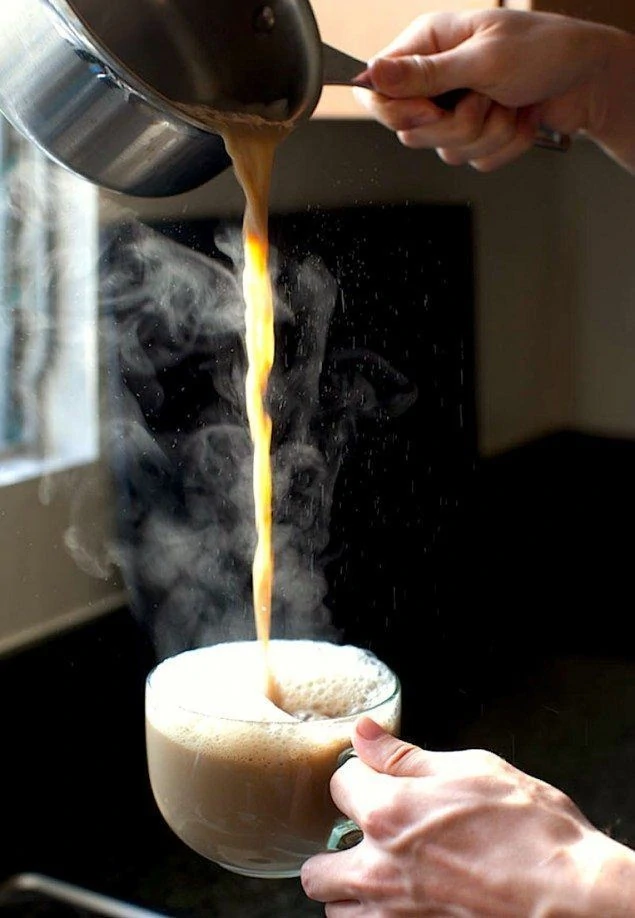
Unlike regular tea brewed by steeping, Masala Chai is prepared by boiling the black tea together with milk, sugar, and spices in a pot. The mixture is brought to a boil, strained, and often sweetened further. Due to the generous amount of sugar, Masala Chai typically has a rich, sweet flavor.
Tea holds a ceremonial role in Indian life, especially in the mornings. It is central to social interaction—friends and family gather over tea to converse and connect, whether at roadside chai stalls or in the home. In many Indian households, tea is not just a habit—it is a cultural tradition passed from generation to generation..
Masala Chai is a distinctive spiced milk tea that originated in India. Typically made with a base of black tea, it is brewed with milk, sugar, and a blend of aromatic spices such as cardamom, cinnamon, cloves, and ginger. For Indians, tea is more than just a beverage—it is an integral part of daily life and a cherished social ritual.
India’s tea culture has ancient roots, stretching back thousands of years. In early times, tea was used more as a medicinal herb than a daily drink. It wasn’t until the British colonial period that tea cultivation and consumption began to flourish. The British East India Company introduced Chinese tea varieties to India and established large tea plantations, helping turn the country into one of the world’s major tea producers.
Each tea-producing region in India boasts its own unique geography and climate, influencing the character and flavor of its teas. The two most renowned Indian black teas are Assam and Darjeeling, each known for distinct qualities: • Assam tea, grown in the northeastern state of Assam, is famous for its bold flavor, malty notes, and bright, clear liquor. It is commonly used as the base for milk teas. • Darjeeling tea, grown in the foothills of the Himalayas, is prized for its delicate floral and fruity aroma, and its elegant, refined taste.
Unlike regular tea brewed by steeping, Masala Chai is prepared by boiling the black tea together with milk, sugar, and spices in a pot. The mixture is brought to a boil, strained, and often sweetened further. Due to the generous amount of sugar, Masala Chai typically has a rich, sweet flavor.
Tea holds a ceremonial role in Indian life, especially in the mornings. It is central to social interaction—friends and family gather over tea to converse and connect, whether at roadside chai stalls or in the home. In many Indian households, tea is not just a habit—it is a cultural tradition passed from generation to generation..
马来西亚拉茶 Malaysian Pulled Tea
马来西亚拉茶 Malaysian Pulled Tea起源自移民至马来西亚的印度人。拉茶是用两个杯子拉来拉去,拉得越长,起泡越多,味道就会好。拉茶是马来西亚人民所独创,并且是人们最喜爱和饮用最普遍的含茶饮料。在马来西亚不论是在像吉隆坡这样大都市中的豪华宾馆酒肆,还是在偏远集镇大街小巷的小档口内,都可喝到味道鲜美的拉茶。做拉茶,必须选用马来西亚的茶叶,荷兰出品的黑白奶,以及少许肉桂粉冲调,令到茶味香浓又带一点香料特有甜香。马来西亚人将茶香与奶水混合在一起後,反覆倒在茶杯间,两只茶杯距离越远,泡沫就越细致,用“拉”这个动作,混合奶水於茶中,从而带出浓郁风味的奶香,即称作“拉茶”。在对茶汤的反复拉制过程中,茶汤和炼乳的混合更为充分,并且使牛乳颗粒因受到反复倒拉、撞击而破碎,形成至乳化状态,使其既能和茶汤有机结合,又能使茶香与奶香获得充分的发挥。拉茶动作反复交替进行不能少于7次,而拉得越长,起泡越多,这样做出来的茶,饮下去才会全是香滑的泡沫,幼滑且富茶香。
Malaysian Pulled Tea
Teh Tarik, or “pulled tea,” originated from Indian immigrants in Malaysia. It is made by repeatedly “pulling” the tea between two cups—pouring it back and forth from a height. The longer and higher the pull, the more foam is created, and the better the taste. Teh Tarik is a uniquely Malaysian creation and is one of the most beloved and widely consumed tea-based beverages in the country.
In Malaysia, whether you’re in a luxurious hotel in a big city like Kuala Lumpur or at a small roadside stall in a remote town, you can find a delicious cup of Teh Tarik.
To make authentic Teh Tarik, one must use locally sourced Malaysian tea leaves, Dutch-produced evaporated milk (black & white milk), and a hint of cinnamon powder. This blend gives the tea a rich, aromatic flavor with a touch of sweet spice.
The preparation involves mixing brewed tea with sweetened milk and then pouring the mixture back and forth between two cups held at a distance. The “pulling” action creates fine foam and thoroughly blends the milk into the tea, enhancing the flavor and texture. The repeated motion not only emulsifies the milk, breaking it down into finer particles, but also ensures a perfect harmony between the tea’s robustness and the milk’s creaminess.
Traditionally, the pulling process is repeated no fewer than seven times. The longer the pull and the more foam produced, the smoother and more fragrant the resulting tea. A well-made Teh Tarik is topped with a velvety layer of froth and offers a perfectly balanced, silky sip rich in both tea and milk aroma..
Malaysian Pulled Tea
Teh Tarik, or “pulled tea,” originated from Indian immigrants in Malaysia. It is made by repeatedly “pulling” the tea between two cups—pouring it back and forth from a height. The longer and higher the pull, the more foam is created, and the better the taste. Teh Tarik is a uniquely Malaysian creation and is one of the most beloved and widely consumed tea-based beverages in the country.
In Malaysia, whether you’re in a luxurious hotel in a big city like Kuala Lumpur or at a small roadside stall in a remote town, you can find a delicious cup of Teh Tarik.
To make authentic Teh Tarik, one must use locally sourced Malaysian tea leaves, Dutch-produced evaporated milk (black & white milk), and a hint of cinnamon powder. This blend gives the tea a rich, aromatic flavor with a touch of sweet spice.
The preparation involves mixing brewed tea with sweetened milk and then pouring the mixture back and forth between two cups held at a distance. The “pulling” action creates fine foam and thoroughly blends the milk into the tea, enhancing the flavor and texture. The repeated motion not only emulsifies the milk, breaking it down into finer particles, but also ensures a perfect harmony between the tea’s robustness and the milk’s creaminess.
Traditionally, the pulling process is repeated no fewer than seven times. The longer the pull and the more foam produced, the smoother and more fragrant the resulting tea. A well-made Teh Tarik is topped with a velvety layer of froth and offers a perfectly balanced, silky sip rich in both tea and milk aroma..

港式奶茶 Hong Kong Milk Tea
港式奶茶 Hong Kong Milk Tea自英国开始在香港的殖民统治,英国人就把“下午茶”这个概念带到香港。和一般华人在早上喝茶的习惯不同:西方人习惯在下午三时左右,午饭至放工中间的一段时间,享受西茶之余,再佐以西点。由于锡兰出产的红茶味道较好而价钱又便宜,所以锡兰红茶在香港十分流行。西方人喝茶习惯加淡奶和糖,使茶入口更香更滑,这也成为了香港奶茶的基本。港式奶茶又称为丝袜奶茶。所谓“丝袜奶茶”,其实就是把煮好的锡兰红茶用一个尼龙网先行过滤,然后再加入奶和糖。过滤这一步骤除了滤走茶渣以外,也使红茶更香滑。由于原创人使用特制白布袋,时间久了,看起来茶袋像丝袜,所以被称作丝袜奶茶,但大部分人都会用一个尼龙网镶在一个金属框架内。用来冲奶茶的锡兰红茶分为粗茶和幼茶两种,餐厅透过控制粗幼茶的份量,就能改变冲出来的奶茶的香味、色泽及浓度。先把锡兰红茶放入尼龙网内,然后把网浸入巨型水煲内,并用钩把网钩在水煲的边沿。把茶焖在茶煲内数分钟后(称为焗茶),把茶倒出到另一茶壶内,来回倒数次(称为撞茶)。最后倒进已放入淡奶的杯内。
Hong Kong–Style Milk Tea: A Colonial Legacy Turned Cultural Icon
Hong Kong–style milk tea, often affectionately known as “silk-stocking milk tea,” has its roots in British colonial influence. When the British introduced the concept of afternoon tea to Hong Kong, it contrasted with the traditional Chinese custom of drinking tea in the morning. In Western tradition, tea was typically enjoyed around 3 p.m., between lunch and the end of the workday, often paired with pastries and light snacks.The Birth of a Local Favorite. Among the black teas used, Ceylon tea (from Sri Lanka) became especially popular in Hong Kong due to its rich flavor and affordability. Inspired by the British custom of adding evaporated milk and sugar to black tea, locals developed their own version—one that is now an iconic part of Hong Kong’s culinary identity.Why “Silk-Stocking Milk Tea”? The term “silk-stocking milk tea” refers not to any actual hosiery, but to the nylon filter used in preparing the tea. Originally, a special white cloth bag was used, which, over time and with heavy use, began to resemble a silk stocking—hence the nickname. Today, the nylon filter is usually fitted into a metal ring frame and serves to filter out tea leaves and enhance the tea’s smoothness and aroma.The Brewing Process: The key to authentic Hong Kong milk tea lies in the blend of Ceylon black teas, which usually include a mix of coarse and fine tea leaves. By adjusting the ratio, tea shops can vary the tea’s flavor, color, and strength.Here’s how it’s traditionally made: 1. Blending the Tea: A measured mix of coarse and fine Ceylon black teas is placed into a nylon filter. 2. Brewing: The filter is steeped in a large pot of boiling water. The tea is left to simmer and develop flavor—a process known as “brewing”. 3. Pouring Back and Forth: The tea is then poured repeatedly between pots—a method called “pulling” or “crashing” the tea —to further aerate and smoothen it. 4. Serving: Finally, the hot tea is poured into a cup that already contains evaporated milk (and sugar if desired), resulting in a drink that is bold, velvety, and deeply aromatic.Cultural Significance: Hong Kong–style milk tea is more than a drink—it’s a symbol of local identity and craftsmanship, found in everything from high-end restaurants to humble cha chaan tengs (Hong Kong–style diners). Its complex preparation and bold flavor reflect the fusion of East and West, tradition and innovation.
Hong Kong–Style Milk Tea: A Colonial Legacy Turned Cultural Icon
Hong Kong–style milk tea, often affectionately known as “silk-stocking milk tea,” has its roots in British colonial influence. When the British introduced the concept of afternoon tea to Hong Kong, it contrasted with the traditional Chinese custom of drinking tea in the morning. In Western tradition, tea was typically enjoyed around 3 p.m., between lunch and the end of the workday, often paired with pastries and light snacks.The Birth of a Local Favorite. Among the black teas used, Ceylon tea (from Sri Lanka) became especially popular in Hong Kong due to its rich flavor and affordability. Inspired by the British custom of adding evaporated milk and sugar to black tea, locals developed their own version—one that is now an iconic part of Hong Kong’s culinary identity.Why “Silk-Stocking Milk Tea”? The term “silk-stocking milk tea” refers not to any actual hosiery, but to the nylon filter used in preparing the tea. Originally, a special white cloth bag was used, which, over time and with heavy use, began to resemble a silk stocking—hence the nickname. Today, the nylon filter is usually fitted into a metal ring frame and serves to filter out tea leaves and enhance the tea’s smoothness and aroma.The Brewing Process: The key to authentic Hong Kong milk tea lies in the blend of Ceylon black teas, which usually include a mix of coarse and fine tea leaves. By adjusting the ratio, tea shops can vary the tea’s flavor, color, and strength.Here’s how it’s traditionally made: 1. Blending the Tea: A measured mix of coarse and fine Ceylon black teas is placed into a nylon filter. 2. Brewing: The filter is steeped in a large pot of boiling water. The tea is left to simmer and develop flavor—a process known as “brewing”. 3. Pouring Back and Forth: The tea is then poured repeatedly between pots—a method called “pulling” or “crashing” the tea —to further aerate and smoothen it. 4. Serving: Finally, the hot tea is poured into a cup that already contains evaporated milk (and sugar if desired), resulting in a drink that is bold, velvety, and deeply aromatic.Cultural Significance: Hong Kong–style milk tea is more than a drink—it’s a symbol of local identity and craftsmanship, found in everything from high-end restaurants to humble cha chaan tengs (Hong Kong–style diners). Its complex preparation and bold flavor reflect the fusion of East and West, tradition and innovation.