中国 China
茶出中国,源远流长。传说约公元前2737年中国古代神农氏在尝百草时偶然发现茶树叶可以解毒,这被认为是茶最早的发现。
Tea originated in China and has a long history. Legend has it that in 2737 BC, Shennong, an ancient Chinese, accidentally discovered that tea leaves could detoxify when he was tasting hundreds of herbs. This is considered the earliest discovery of tea.
伴随农业技术的发展,茶树从野生发展为人工种植。在浙江发现了已知最早的人工种植茶树根,距今约6000年。山东战国墓葬出土了经过煮(泡)的茶叶遗存,是最古老的饮茶实物证据,距今约2400年。
With the development of agricultural technology, tea trees have evolved from wild to artificially cultivated. The earliest known artificially cultivated tea tree roots were discovered in Zhejiang, dating back about 6,000 years. The remains of boiled (brewed) tea leaves unearthed from the Warring States tombs in Shandong are the oldest physical evidence of tea drinking, dating back about 2,400 years.
汉代更多人开始接受茶叶,巴蜀形成了专门交易茶叶的市场,但时人仍然像煮菜汤一样饮茶。最早的文字记载是在西汉(公元前2世纪)的《尔雅》中已出现“荼”字(古茶字)。东汉时王褒的《僮约》也提到“煮荼”。“茶”原写作“荼”,是茶一字的早期写法,当时以「荼」表草药或滋养品。汉阳陵中发现小叶种茶树的嫩芽,但或许是作为蔬菜下饭。
In the Han Dynasty, more people began to accept tea, and a market specialized in tea trading was formed in Bashu, but people at that time still drank tea like cooking soup. The earliest written record was in Er Ya in the Western Han Dynasty (2nd century BC), where the word "荼" (ancient tea word) appeared. Wang Bao's Tong Yue in the Eastern Han Dynasty also mentioned "cooking tea". "Tea" was originally written as "荼", which was an early way of writing the word tea. At that time, "荼" represented herbal medicine or nourishing products. The young shoots of the small-leaf tea tree were found in the Han Yangling, but they might have been used as vegetables to go with rice.
至少从三国、两晋南北朝起,中国已有喝茶的风气。北朝宫廷备有茶叶招待南方来的降臣和使节,南朝则讲究烹茶用水和器具。杜育《荈赋》最早描述了茶的生长、采摘、器具、冲泡以及品饮;文人也开始将茶和俭约、朴素联系在一起,如《晋中兴书》云「所设唯茶果而已」。
At least since the Three Kingdoms, the Jin Dynasty and the Northern and Southern Dynasties, China has had a tea drinking culture. The court of the Northern Dynasties prepared tea to entertain the surrendered ministers and envoys from the south, while the Southern Dynasties paid attention to the water and utensils for brewing tea. Du Yu's "Tea Fu" was the first to describe the growth, picking, utensils, brewing and drinking of tea; literati also began to associate tea with frugality and simplicity, such as "The Book of Jin Zhongxing" said "Only tea and fruit were prepared."
唐朝(618–907)茶开始兴盛,是茶文化大发展的时期。唐玄宗时期编纂《开元文字音义》将含义为茶的“荼”改为“茶”,沿用至今。陆羽(733–804)撰写了《茶经》,是世界上第一部关于茶的专著,系统总结了茶的种植、加工、品饮等知识。陆羽《茶经》总结了唐以前茶的不同名称:“一曰茶,二曰槚(音贾),三曰蔎(音设),四曰茗,五曰荈(音喘)。”茶之功效见诸众多古籍,如陆羽《茶经》所述,茶能止渴、祛闷、明目、醒脑、舒筋等。茶成为文人雅士的重要生活部分,也成为待客礼仪。
Tea began to flourish during the Tang Dynasty (618–907), which was a period of great development of tea culture. The Kaiyuan Text Sound and Meaning compiled during the reign of Emperor Xuanzong of the Tang Dynasty changed the word "Tu" (tea) to "Cha", which is still used today. Lu Yu (733–804) wrote the "The Classic of Tea", the world's first monograph on tea, which systematically summarizes the knowledge of tea planting, processing, and drinking. Lu Yu's "The Classic of Tea" summarizes the different names of tea before the Tang Dynasty: "One is tea, the second is Jia (pronounced Jia), the third is She (pronounced She), the fourth is Ming, and the fifth is Chuan (pronounced Chuan)." The benefits of tea can be found in many ancient books. For example, Lu Yu's "The Classic of Tea" states that tea can quench thirst, relieve depression, improve eyesight, refresh the brain, and relax muscles. Tea became an important part of the lives of literati and scholars, and also became a ritual for entertaining guests.
此时期茶开始传入日本、朝鲜半岛,奠定了东亚茶文化的基础。
During this period, tea began to be introduced to Japan and the Korean Peninsula, laying the foundation for East Asian tea culture.
宋代(960–1279)发展出茶艺与点茶技艺。文人间流行斗茶、品茶之风。茶成为宋代文艺审美的重要部分,与诗词、绘画结合。
The art of making tea and the art of brewing tea developed during the Song Dynasty (960–1279). Tea drinking competitions and tea tasting became popular among scholars. Tea became an important part of the literary and artistic aesthetics of the Song Dynasty, combined with poetry and painting.
明代(1368–1644)散茶流行。朱元璋改革贡茶制度,废除团茶(茶饼),推广散茶,更方便饮用。茶具和泡法更趋于简化,流行泡饮法(即用沸水直接泡茶叶)。
During the Ming Dynasty (1368–1644), loose tea became popular. Zhu Yuanzhang reformed the tribute tea system, abolished tea cakes, and promoted loose tea, which was more convenient to drink. Teaware and brewing methods became more simplified, and the brewing method (i.e. brewing tea leaves directly with boiling water) became popular.
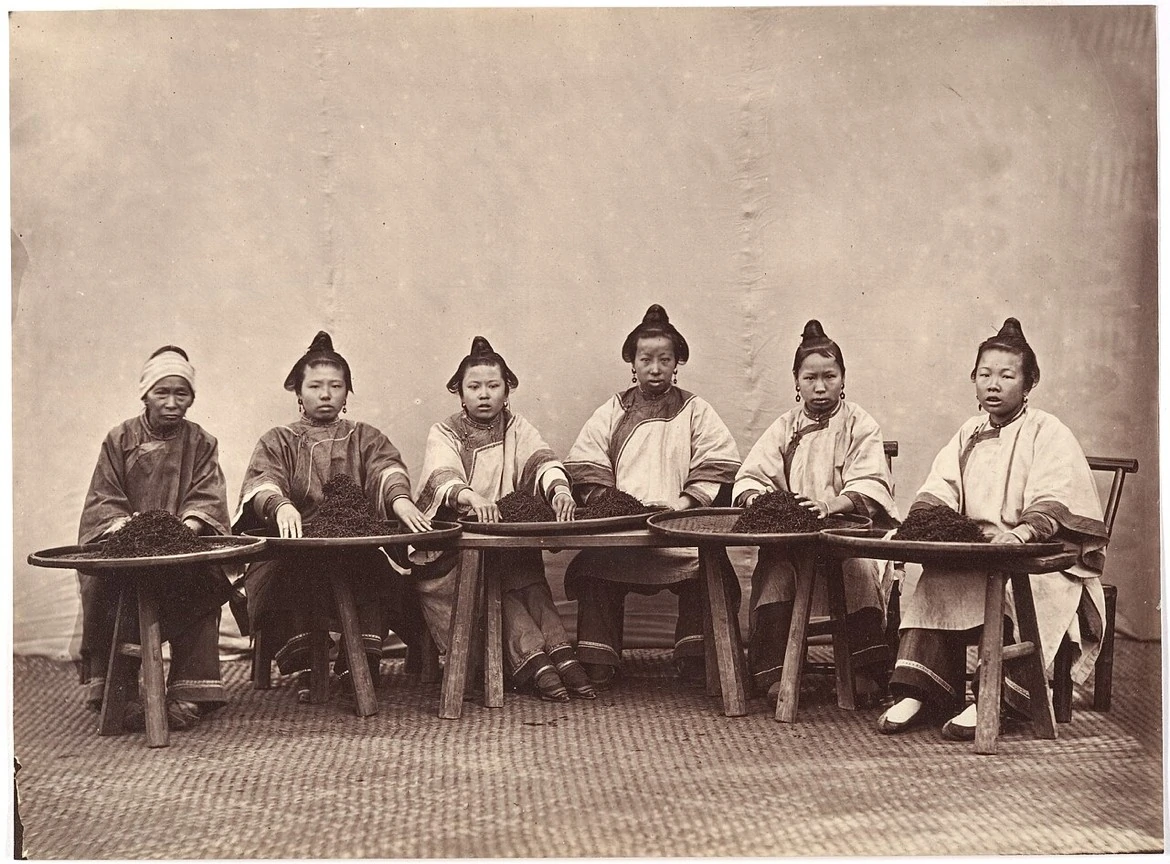
清代(1644–1912)散茶全球传播。各类名茶兴起,如龙井、碧螺春、铁观音、普洱等。茶作为商品出口海外,特别是通过丝绸之路和海上贸易进入欧洲。
During the Qing Dynasty (1644–1912), loose tea spread around the world. Various famous teas emerged, such as Longjing, Biluochun, Tieguanyin, and Pu'er. Tea was exported overseas as a commodity, especially to Europe through the Silk Road and maritime trade.
此时期英国人发展出“下午茶”文化。
During this period, the British developed the "afternoon tea" culture.
Tea originated in China and has a long history. Legend has it that in 2737 BC, Shennong, an ancient Chinese, accidentally discovered that tea leaves could detoxify when he was tasting hundreds of herbs. This is considered the earliest discovery of tea.
伴随农业技术的发展,茶树从野生发展为人工种植。在浙江发现了已知最早的人工种植茶树根,距今约6000年。山东战国墓葬出土了经过煮(泡)的茶叶遗存,是最古老的饮茶实物证据,距今约2400年。
With the development of agricultural technology, tea trees have evolved from wild to artificially cultivated. The earliest known artificially cultivated tea tree roots were discovered in Zhejiang, dating back about 6,000 years. The remains of boiled (brewed) tea leaves unearthed from the Warring States tombs in Shandong are the oldest physical evidence of tea drinking, dating back about 2,400 years.
汉代更多人开始接受茶叶,巴蜀形成了专门交易茶叶的市场,但时人仍然像煮菜汤一样饮茶。最早的文字记载是在西汉(公元前2世纪)的《尔雅》中已出现“荼”字(古茶字)。东汉时王褒的《僮约》也提到“煮荼”。“茶”原写作“荼”,是茶一字的早期写法,当时以「荼」表草药或滋养品。汉阳陵中发现小叶种茶树的嫩芽,但或许是作为蔬菜下饭。
In the Han Dynasty, more people began to accept tea, and a market specialized in tea trading was formed in Bashu, but people at that time still drank tea like cooking soup. The earliest written record was in Er Ya in the Western Han Dynasty (2nd century BC), where the word "荼" (ancient tea word) appeared. Wang Bao's Tong Yue in the Eastern Han Dynasty also mentioned "cooking tea". "Tea" was originally written as "荼", which was an early way of writing the word tea. At that time, "荼" represented herbal medicine or nourishing products. The young shoots of the small-leaf tea tree were found in the Han Yangling, but they might have been used as vegetables to go with rice.
至少从三国、两晋南北朝起,中国已有喝茶的风气。北朝宫廷备有茶叶招待南方来的降臣和使节,南朝则讲究烹茶用水和器具。杜育《荈赋》最早描述了茶的生长、采摘、器具、冲泡以及品饮;文人也开始将茶和俭约、朴素联系在一起,如《晋中兴书》云「所设唯茶果而已」。
At least since the Three Kingdoms, the Jin Dynasty and the Northern and Southern Dynasties, China has had a tea drinking culture. The court of the Northern Dynasties prepared tea to entertain the surrendered ministers and envoys from the south, while the Southern Dynasties paid attention to the water and utensils for brewing tea. Du Yu's "Tea Fu" was the first to describe the growth, picking, utensils, brewing and drinking of tea; literati also began to associate tea with frugality and simplicity, such as "The Book of Jin Zhongxing" said "Only tea and fruit were prepared."
唐朝(618–907)茶开始兴盛,是茶文化大发展的时期。唐玄宗时期编纂《开元文字音义》将含义为茶的“荼”改为“茶”,沿用至今。陆羽(733–804)撰写了《茶经》,是世界上第一部关于茶的专著,系统总结了茶的种植、加工、品饮等知识。陆羽《茶经》总结了唐以前茶的不同名称:“一曰茶,二曰槚(音贾),三曰蔎(音设),四曰茗,五曰荈(音喘)。”茶之功效见诸众多古籍,如陆羽《茶经》所述,茶能止渴、祛闷、明目、醒脑、舒筋等。茶成为文人雅士的重要生活部分,也成为待客礼仪。
Tea began to flourish during the Tang Dynasty (618–907), which was a period of great development of tea culture. The Kaiyuan Text Sound and Meaning compiled during the reign of Emperor Xuanzong of the Tang Dynasty changed the word "Tu" (tea) to "Cha", which is still used today. Lu Yu (733–804) wrote the "The Classic of Tea", the world's first monograph on tea, which systematically summarizes the knowledge of tea planting, processing, and drinking. Lu Yu's "The Classic of Tea" summarizes the different names of tea before the Tang Dynasty: "One is tea, the second is Jia (pronounced Jia), the third is She (pronounced She), the fourth is Ming, and the fifth is Chuan (pronounced Chuan)." The benefits of tea can be found in many ancient books. For example, Lu Yu's "The Classic of Tea" states that tea can quench thirst, relieve depression, improve eyesight, refresh the brain, and relax muscles. Tea became an important part of the lives of literati and scholars, and also became a ritual for entertaining guests.
此时期茶开始传入日本、朝鲜半岛,奠定了东亚茶文化的基础。
During this period, tea began to be introduced to Japan and the Korean Peninsula, laying the foundation for East Asian tea culture.
宋代(960–1279)发展出茶艺与点茶技艺。文人间流行斗茶、品茶之风。茶成为宋代文艺审美的重要部分,与诗词、绘画结合。
The art of making tea and the art of brewing tea developed during the Song Dynasty (960–1279). Tea drinking competitions and tea tasting became popular among scholars. Tea became an important part of the literary and artistic aesthetics of the Song Dynasty, combined with poetry and painting.
明代(1368–1644)散茶流行。朱元璋改革贡茶制度,废除团茶(茶饼),推广散茶,更方便饮用。茶具和泡法更趋于简化,流行泡饮法(即用沸水直接泡茶叶)。
During the Ming Dynasty (1368–1644), loose tea became popular. Zhu Yuanzhang reformed the tribute tea system, abolished tea cakes, and promoted loose tea, which was more convenient to drink. Teaware and brewing methods became more simplified, and the brewing method (i.e. brewing tea leaves directly with boiling water) became popular.
清代(1644–1912)散茶全球传播。各类名茶兴起,如龙井、碧螺春、铁观音、普洱等。茶作为商品出口海外,特别是通过丝绸之路和海上贸易进入欧洲。
During the Qing Dynasty (1644–1912), loose tea spread around the world. Various famous teas emerged, such as Longjing, Biluochun, Tieguanyin, and Pu'er. Tea was exported overseas as a commodity, especially to Europe through the Silk Road and maritime trade.
此时期英国人发展出“下午茶”文化。
During this period, the British developed the "afternoon tea" culture.